
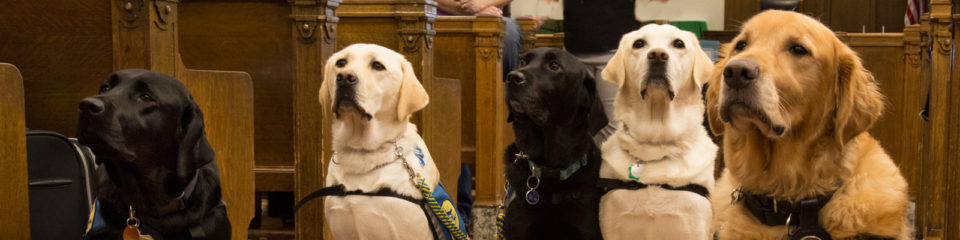
What type of dog should be used in the courtroom?
The only dogs that should accompany a witness in the courtroom are those trained by organizations accredited by Assistance Dogs International (ADI). Most of these dogs have been in training since they were young puppies until they are about two years old. Only the very best are selected to become assistance dogs. These ADI accredited organizations also provide extensive training and ongoing support to the person who receives the dog so that the quality of the dog’s performance remains high.
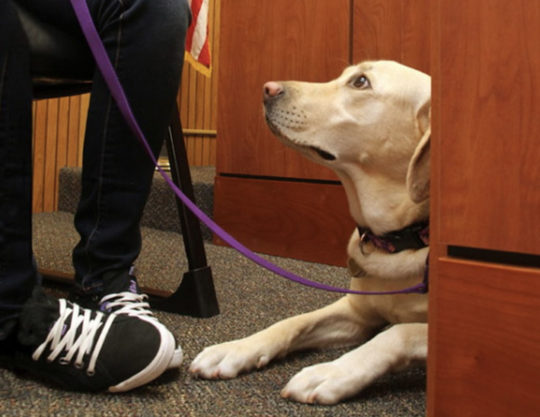
Courthouse facility dogs accompanying a witness in the courtroom should have the following characteristics:
- They must be quiet, unobtrusive, and emotionally available for the witness when the need arises
- The dogs should be able to sit or lie down beside the witness for an extended period of time
- The dogs should not engage in any behavior that would distract the witness or other people in the courtroom
- The dogs should be able to assist the witness for as long as necessary.
When should a dog accompany a witness to the stand?
A courthouse facility dog should be used to provide support to a witness only when canine assistance is truly required. You can make this assessment while preparing the witness for the trial. In one instance, the prosecutor asked the judge to allow a courthouse facility dog to assist seven-year-old girls who had been sexually assaulted, after the girls cried and absolutely refused to sit in the witness chair. In another case, the judge permitted a courthouse facility dog to assist an adult rape victim when the victim exhibited physical symptoms of stress. She told the judge she needed the dog to get through the ordeal of seeing the defendant and his defiant family in the courtroom while she testified.
For the dog to be most successful in supporting the witness, the dog and witness should have had an opportunity to interact with each other and bond during pre-trial interviews. This will give them an opportunity to comfortable together during this stressful time.
Read an article in the ABA Animal Law Newsletter – “Courthouse Dogs – A Case Study“ for a prosecutor’s perspective of how Ellie assisted a young child during a defense interview, a competency hearing, and a trial, and why the child needed her support.
Watch a video created by the Pima County District Attorney’s Office:
A courthouse facility dog helps defense counsel, too
A defense attorney who is comfortable with dogs can benefit from using the dog during cross-examination. In one trial, defense counsel questioned the child about her abuse with the facility dog seated between her and the child. During questioning, both petted the dog and, rather than appearing to be grilling the child, it sounded as though they were having a quiet conversation. Jurors thought defense counsel was quite gentle with the child. Although the case ended in a mistrial, the child did not appear to have been stressed by the cross-examination. The defendant eventually entered a guilty plea to a similar but less serious offense, and the child did not have to make any more court appearances.
The jury’s response to the dog
The juries that we have spoken to have not found the dog’s presence beside the witness to be distracting or inappropriate. They understand that some witnesses, especially children, require additional support during a trial.
The appellate courts also presume that the jury will follow the court’s instructions and will “not make any assumptions or draw any conclusions based on the presence of the dog.” State v. Dye, 283 P.3d 1130, (Wash. App. Div. 1, 2012) See appellate decision.