
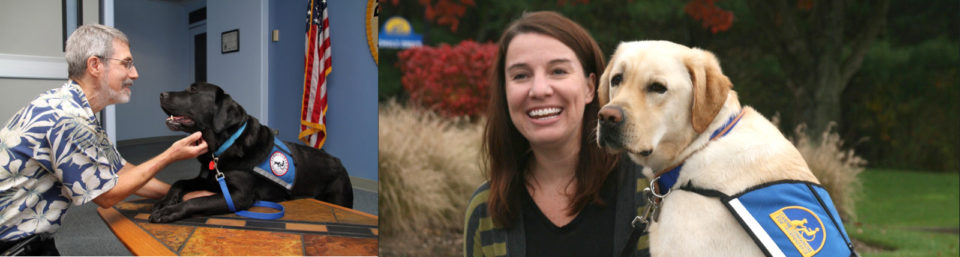
Standards for a Successful Courthouse Dog® Program
- Dog is a graduate of an accredited assistance dog school.
- These nonprofit organizations are accredited by Assistance Dogs International (ADI). A list of accredited assistance dog organizations can be found on the ADI web site.
- A graduate dog that assists a professional in his/her work is termed a “facility dog”.
- The dog’s handler is a working professional in the legal field. Examples of suitable handlers include victim advocates, detectives, forensic interviewers, and assistant prosecutors. These professionals have received extensive training from the assistance dog organization about how to handle and care for their dog.
- Involved staff members have been trained in handling/use of the dog by professionals knowledgeable in the work that the dog will be doing about the legal aspects of incorporating a courthouse facility dog in the investigation and prosecution of crimes as well as handling/use of the dog during those proceedings.
The Dog
A facility dog is not a service dog, as it does not assist a person with a disability, nor does it have public access (except in the State of Washington). As a facility dog, it assists professionals by improving the quality of their work. Examples of other venues where facility dogs are used include special education classrooms, occupational therapy clinics, and veterans’ hospitals.
As a graduate from an accredited service dog organization, the dog will come to your office after approximately 2 years of training. It will have passed the same public access test that is used to ensure that guide dogs are safe in public as they work with their visually impaired owners. For another example of the importance of ADI accreditation, the US Department of Veteran Affairs has ruled that only graduate dogs from ADI accredited organizations meet the high standards to work with disabled veterans – please see the VA’s statement in the Federal Register. This same high standard should be applied to dogs that will be interacting with vulnerable crime victims during critical legal proceedings.
The Handler
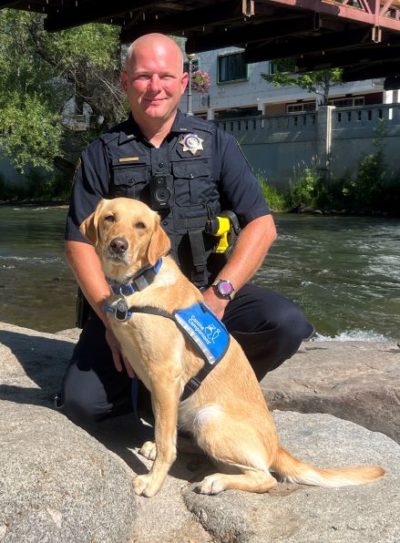
Lieutenant Michael Browett, Reno PD, and facility dog Winter, trained by Canine Companions
A courthouse facility dog will require a primary handler who is employed by your office. The dog will live with the handler and this person will be primarily responsible for the dog’s care. The dog will consider this person to be his or her owner. The handler is usually a victim advocate, forensic interviewer, law enforcement officer, or assistant district attorney because the dog will be assisting this person most of the time. In addition to the primary handler, there may be one or two other people who are trained to work with and care for the dog when the primary handler is unavailable.